 Bỏ qua nội dung
 Trang chủ
Kèo nhà cái Mỹ vs Bosnia và Herzegovina phản ánh cuộc chiến đầy kịch tính giữa hai đội bóng sáng giá trong giải World Cup 2026. Trận đấu được dự đoán sẽ diễn ra căng thẳng với nhiều diễn biến đáng mong chờ trên sân cỏ cũng như thị trường cá cược. Theo dõi bài viết để không bỏ lỡ những phân tích tỷ lệ kèo trước giờ G.
Thành tích trong vòng bảng của Mỹ vs Bosnia Và Herzegovina
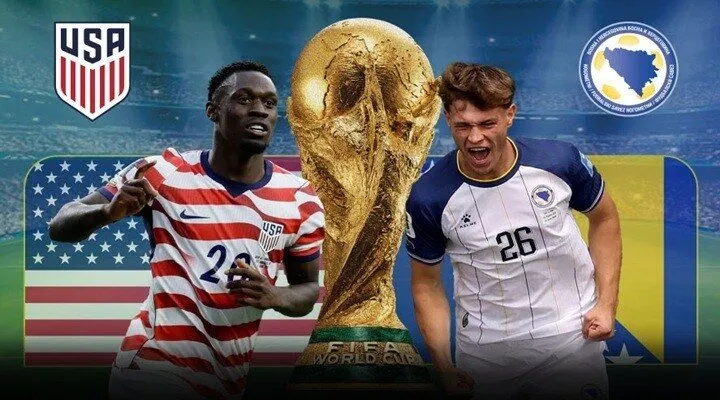
Mỹ bước vào vòng 32 đội với vị thế đội nhất bảng D, thể hiện phong độ ổn định xuyên suốt vòng bảng. Trong khi đó, Bosnia và Herzegovina giành quyền đi tiếp với tư cách một trong những đội xếp thứ ba có thành tích tốt, sau chiến thắng quan trọng trước Qatar tại lượt đấu cuối.
Trước khi nhận định về trận đấu vòng 32 đội giữa Mỹ vs Bosnia và Herzegovina. Chúng ta hãy cùng tổng hợp lại thành tích hai đội đã ghi được trong vòng bảng.
| Thống kê vòng bảng | Mỹ | Bosnia & Herzegovina |
| Vị trí trong vòng bảng | Nhất bảng D | Hạng 3 bảng B |
| Trận đấu đã tham gia | 3 | 3 |
| Số trận thắng, thua, hòa | 2 thắng, 0 hòa, 1 thua | 1 thắng, 1 hòa, 1 thua |
| Điểm số | 6 | 4 |
Trước đó, Mỹ thắng Paraguay và Australia, thua Thổ Nhĩ Kỳ ở lượt cuối nhưng vẫn giữ ngôi đầu bảng D. Còn Bosnia và Herzegovina hòa Canada, thua Thụy Sĩ và thắng Qatar 3-1 để giành vé vào vòng knock-out. Vì vậy, trên các trang cược kèo nhà cái Mỹ vs Bosnia và Herzegovina đang nghiêng hẳn về phía đội bóng xứ cờ hoa.
Phong độ hiện tại của Mỹ vs Bosnia và Herzegovina
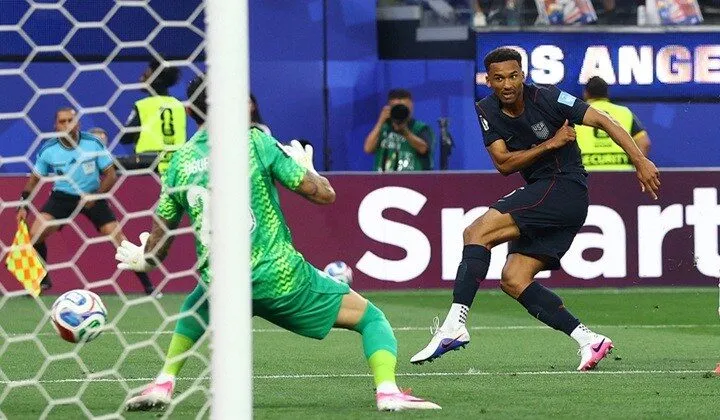
Nhìn vào phong độ trước thềm vòng knock-out anh em có thể thấy được sự khác biệt về phong độ của cả 2 đội.
Phong độ của đội tuyển Mỹ
Mỹ đang cho thấy sự ổn định đáng kinh ngạc khi bất bại 5 trận gần nhất (thắng 4, hòa 1). Hàng công của tuyển Mỹ dưới sự dẫn dắt của “Captain America” Pulisic đang vận hành rất trơn tru với hiệu suất trung bình 2 bàn/trận tại vòng bảng.
Phong độ của đội tuyển Bosnia & Herzegovina
Bosnia & Herzegovina có chuỗi phong độ trồi sụt hơn (thắng 2, hòa 1, thua 2 trong 5 trận gần đây). Tuy nhiên, điểm mạnh của đội bóng này là khả năng chịu áp lực cực tốt trước các ông lớn.
Nhìn nhận về lịch sử đối đầu giữa Mỹ vs Bosnia & Herzegovina
Không chỉ cần chú ý về phong độ, mà để soi kèo nhà cái Mỹ vs Bosnia và Herzegovina chính xác. Anh em còn cần nhìn nhận thật kỹ về lịch sử đối đầu giữa hai đội tuyển.
Theo đó, trong quá khứ hai đội mới chỉ có 3 lần chạm trán nhau trong quá khứ ở các trận giao hữu quốc tế với kết quả nghiêng hẳn về phía tuyển Mỹ (Mỹ thắng 2, hòa 1). Trận đấu gần nhất diễn ra vào cuối năm 2021, Mỹ đã giành chiến thắng tối thiểu 1-0.
Tính chất của một trận đấu loại trực tiếp tại World Cup chắc chắn sẽ khiến lần tái đấu này trở nên căng thẳng và khó lường hơn rất nhiều. Đây cũng chính là lý do khiến cho bảng tỷ lệ kèo nhà cái Mỹ vs Bosnia và Herzegovina biến động liên tục trước giờ bóng lăn.
Nhận định lối chơi của hai đội trong trận

Lối chơi của hai đội trong trận được giới chuyên môn dự đoán là sẽ có sự khác biệt lớn.
Mỹ ưu tiên kiểm soát bóng
Đội bóng xứ cờ hoa được dự đoán cầm bóng nhiều hơn, liên tục luân chuyển bóng để kéo giãn hàng thủ Bosnia & Herzegovina. Khi đối thủ lộ khoảng trống, Mỹ sẽ tăng tốc bằng các pha chồng biên và xâm nhập vòng cấm. Giới đầu tư cần đặc biệt chú ý đến điều này khi dự đoán và vào kèo nhà cái Mỹ vs Bosnia và Herzegovina.
Bosnia & Herzegovina chơi trong thế trận chặt chẽ
Đại diện châu Âu nhiều khả năng chơi với đội hình thấp, tập trung đông quân số ở khu vực giữa sân nhằm bẻ gãy các đợt lên bóng của Mỹ. Mục tiêu của họ là đưa trận đấu về thế giằng co càng lâu càng tốt.
Phân tích kèo nhà cái Mỹ vs Bosnia và Herzegovina
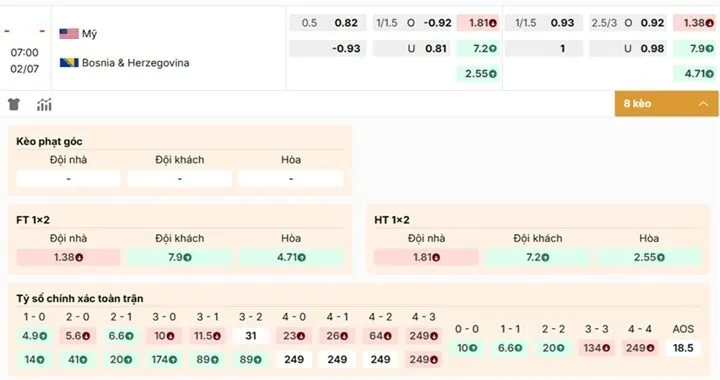
Dựa trên phong độ và lối chơi hiện tại của cả hai đội, giới chuyên môn đưa ra dự đoán về tỷ lệ kèo Mỹ vs Bosnia và Herzegovina sẽ không chênh lệch quá nhiều. Mức chấp Mỹ -0.5 cho thấy nhà cái đánh giá đại diện Bắc Mỹ cao hơn nhưng vẫn dành sự tôn trọng cho Bosnia & Herzegovina. Đây là tỷ lệ phản ánh đúng tương quan lực lượng khi Mỹ có lợi thế về tốc độ, còn đối thủ lại nổi bật nhờ sự chắc chắn trong phòng ngự.
Kèo tài xỉu 2.5 bàn cho thấy nhà cái dự đoán trận đấu xuất hiện nhiều bàn thắng hay không còn phụ thuộc lớn vào thời điểm có bàn mở tỷ số. Nếu thế cân bằng được duy trì trong hiệp một, cửa Xỉu sẽ có nhiều lợi thế hơn.
Dựa trên phân tích trên, giới đầu tư nên ưu tiên chốt kèo nhà cái Mỹ vs Bosnia và Herzegovina như sau:
- Kèo châu Á: Mỹ -0.5
- Kèo Tài Xỉu: Xỉu 2.5
- Kèo phạt góc: Tài góc
- Kèo thẻ phạt: Tài thẻ
- Dự đoán tỷ số: Mỹ 2-1 Bosnia & Herzegovina.
Không có chỗ cho sự chủ quan ở giai đoạn vòng loại trực tiếp, nhất là khi cả hai đội đều đang đứng trước cơ hội được bước tiếp hành trình tại World Cup 2026. Kèo Nhà Cái Mỹ vs Bosnia và Herzegovina dự là sẽ còn nhiều biến động trước và trong trận. Anh em hãy chú ý theo dõi và liên tục cập nhật thông tin mới nhất để chọn được cửa cược sáng giá.